02-16-2026
NC’s Ports Deliver Global Connectivity for North Carolina’s Southeast
The 20-county region known as North Carolina’s Southeast (NCSE) is strategically positioned for global commerce. At the core of this connectivity are the state’s maritime ports, primarily Port of Wilmington and Port of Morehead City, which serve as gateways to worldwide markets and logistics networks.
Gateways to the Global Economy
North Carolina Ports, the state authority that operates major seaport facilities, functions with a clear mission to connect North Carolina businesses to international markets. Its two ocean ports – Port of Wilmington and Port of Morehead City – are the physical infrastructure that enables this, and both ports are in or within an hour of NCSE member counties.
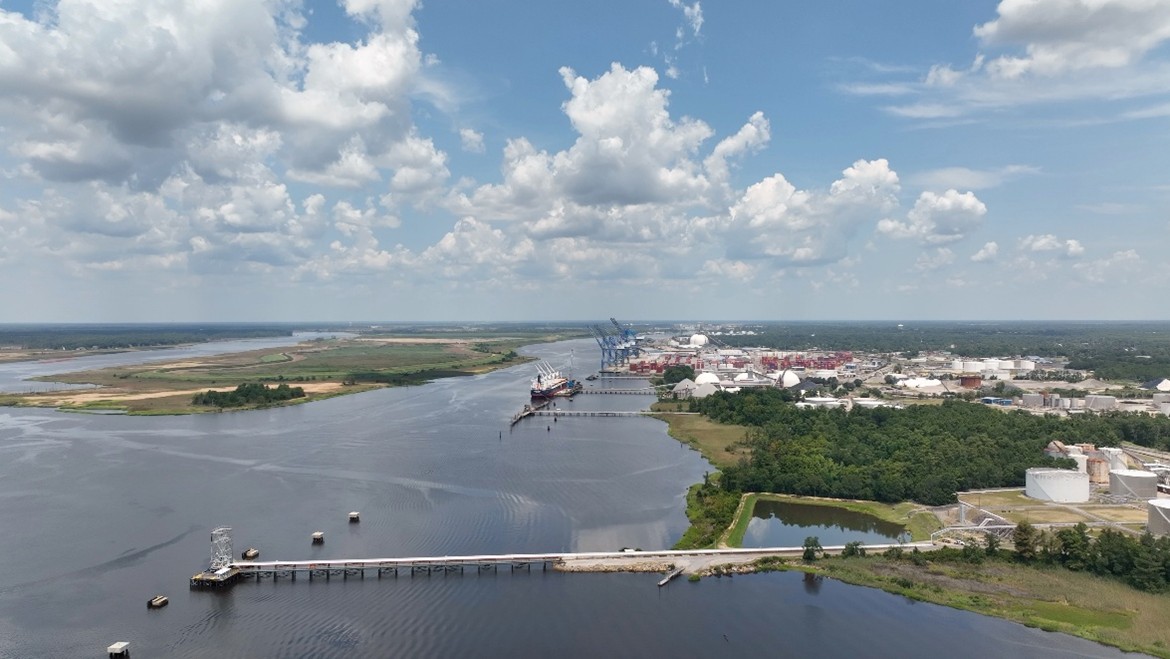
Port of Wilmington on the Cape Fear River is a deepwater container port only 26 miles from the open sea, with industrial-strength cranes, expansive storage, and a maintained channel, making it one of the most productive terminals on the U.S. East Coast. Specifically, the port offers terminal facilities serving container, bulk, breakbulk, and ro-ro operations. It offers a deep 42-foot navigational channel, nine berths with nearly 7.000 feet of wharf frontage, four post-Panamax container cranes, and three neo-Panamax container cranes. Modern transit and warehouse facilities and the latest in cargo management technology provide a broad platform for supporting international trade.
Port of Morehead City, only four miles from the open Atlantic, specializes in bulk and breakbulk cargo – materials essential to agriculture, construction, and industrial supply chains. The port is equipped with nine berths and a Liebherr 420 Portal Gantry Crane. Storage offerings include a dry-bulk facility with 220,000-ton capacity warehouse and a 177,000-square-foot warehouse for housing high-value commodities like rubber, paper, steel, and lumber. The port has more than one million square feet of storage, including prime covered and sprinklered, plus 30 acres of paved open area.
Both ports provide direct access to global shipping networks that span Asia, Europe, Central and South America. New services expand direct links to Central America, strengthening routes for textiles, refrigerated produce, and other cargo.
Regional Economic Integration
Ports don’t operate in isolation – they are hubs in a multi-modal logistics system linking maritime, rail, highway, and air transport. North Carolina’s Southeast benefits from:
- Major interstates (I-95, I-40, I-295, future I-42 and future I-74,) that funnel freight inland and to adjacent states.
- Class I mainline rail access (CSX at Wilmington, Norfolk Southern at Morehead City) plus short lines that connect factories and distribution centers directly to the ports.
- Air cargo facilities and foreign-trade zones (FTZs) that reduce customs burdens and accelerate cross-border flows.
This infrastructure footprint ensures that goods – whether a medical device or custom textiles made in the Southeast – can move efficiently from production lines to global endpoints.
Foreign-Trade Zones (FTZ) #214
A critical but often overlooked advantage is the Foreign Trade Zones that most NCSE counties are in, which provide companies with duty-free zones that cut tariffs and streamline international shipments. FTZ 214 covers 12 of the 20 NCSE counties plus half of another county, while FTZ 93 covers Sampson County.
FTZs enhance global connectivity by reducing costs and paperwork for importers and exporters – a competitive differentiator for manufacturers based in the region.
Local Jobs with Global Reach
Ports are major economic engines for the region. Port activity generates direct support for tens of thousands of jobs statewide and significant local tax revenues. Port operations and associated logistics services underpin industries from agriculture to aerospace, tying NCSE communities directly to world markets, supporting truck drivers, warehouse operators, customs specialists, and many others.
Competitive Supply Chain Access
Companies in the Southeast region benefit from:
- Lower transportation costs due to proximity to deepwater ports and highway networks.
- Faster turnaround and reliability, especially at Wilmington’s container terminal, which features higher productivity compared to other North American ports.
- Expanded global routes, including newly launched services to Central America and beyond, which open new markets for local exports.
These strategic advantages allow regional businesses to compete internationally, attract investment, and scale efficient operations.
North Carolina’s Southeast counties are woven into the global economy through a robust port network. From deepwater docks in Wilmington and Morehead City to multimodal transport systems and economic incentives like FTZs, this region stands as a critical node in global supply chains. As international trade evolves, these ports will propel economic opportunity, ensuring North Carolina’s Southeast remains connected to world markets and positioned for sustained growth.